Partly because of the upcoming release of ‘Here Comes the Storm’ I recently learned ‘Blowing in the Wind’ (for the first time) the way Dylan performed it on Freewheeling. There is the normal Dylan reticence to go to chord V which is a great device for sustaining tension and avoiding coming to rest (and passing the buck!), but there was also the fact that the song is simply a series of semi related questions with no obvious answers provided. And yet this is assumed by some to be ‘The Great Protest Song’. In many ways it really is not and is vague and slippery in that department rather like its author. Compared to ‘We shall overcome’ it is rather like a half-hearted shrug by the joker accompanied by: ‘Well we just do not know…’ That does not stop it being a great song as it stands. It is just not, in my view, the great protest song some assume it to be. It is the everything and nothing of protest songs. I can hear the cat descending onto the pigeons at this point…
This all could slide around to protest songs, what are they and how do you write them? I am going to dodge the issue here and say that with the Storm I wrote a song first which happened to contain a protest element. Songs for me are first and foremost abstract entities flying free of the quotidian. When they start to be too invested in the heavy clay of life they struggle for air. It has always been the places that a song takes me to which have excited me, not facts about the here and now. For example: ‘Where all the pretty small birds do change their voices’. That expresses an idea of strangeness because you know that the reality is not like that and have to start thinking: ‘What if…’. I find folk songs which are just the retailing of events particularly turgid, also earnest illustrative attempts to write protest songs and ‘chants’ (often the worst) are just as bad.
I have always written what used to be called ‘cut-ups’ to express ideas in songs. Except that they are not ‘cut-ups’ literally but random connected thoughts straight out of my head. They all have a connection for me but they are what they are to the listener. A favorite song example of this for me is ‘Drive-in Saturday’ by Bowie, which on the face of it, is a catalogue of complete nonsense. The other key element in ‘Here Comes the Storm’ is: What would Woody Guthrie have said on this issue? Answer: probably a lot less that I just have…
The 2018 UN IPCC report made it pretty clear that humans were on an accelerating crash course with climate disaster. At the time I wrote this song I was thinking about who would look after the children, everyone’s children, as the future hostile environment destroyed civilization and the biosphere.
The IPCC report of 2021 (https://www.ipcc.ch/report/ar6/wg1/ go down to ‘SUMMERY FOR POLICYMAKERS SPM’ tab) now says that we are out of time and need to take action on the climate emergency immediately. It is an existential problem that a large number of the human race cannot or will not take steps towards solving and we still have to hit the streets to force our governments to act now.
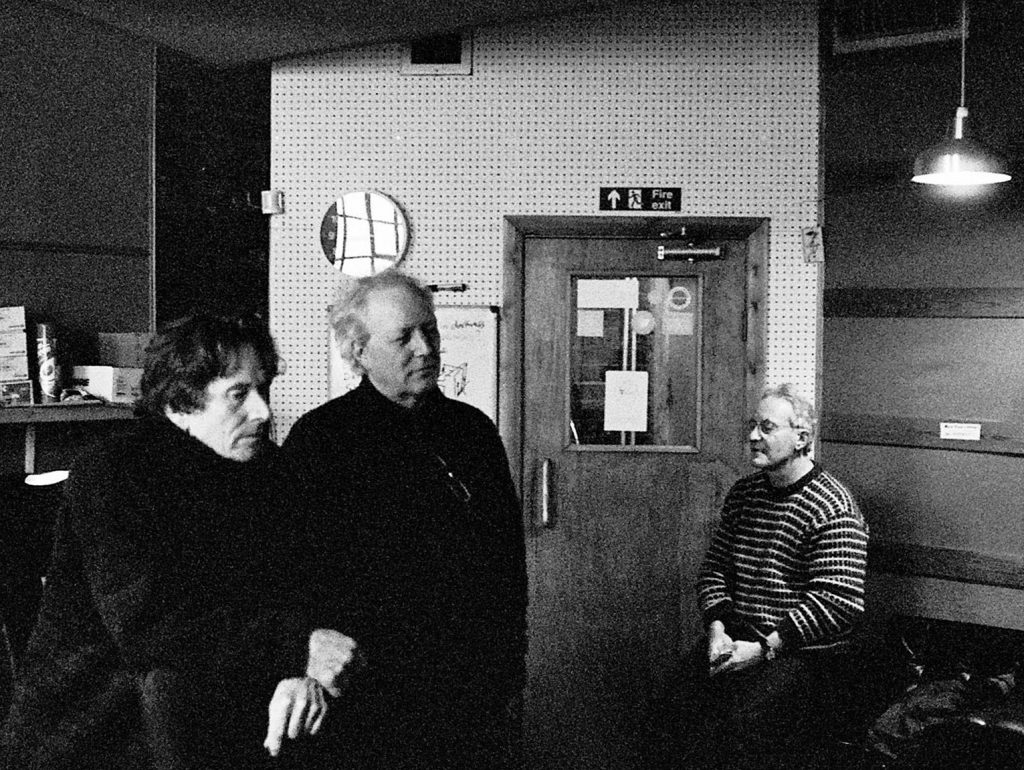
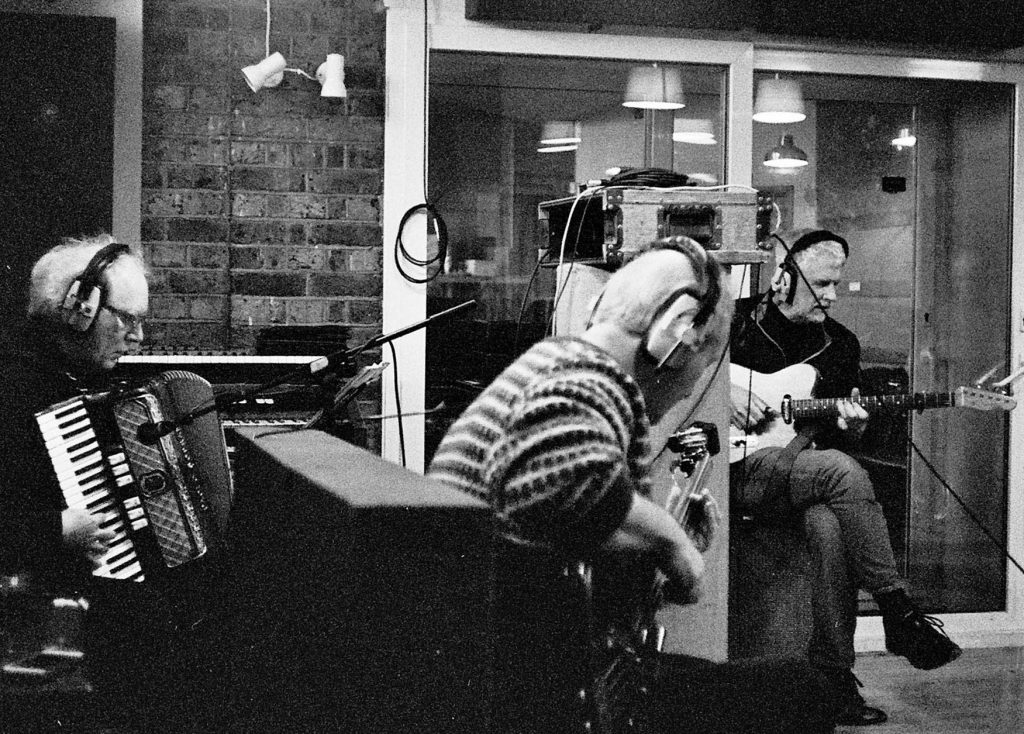
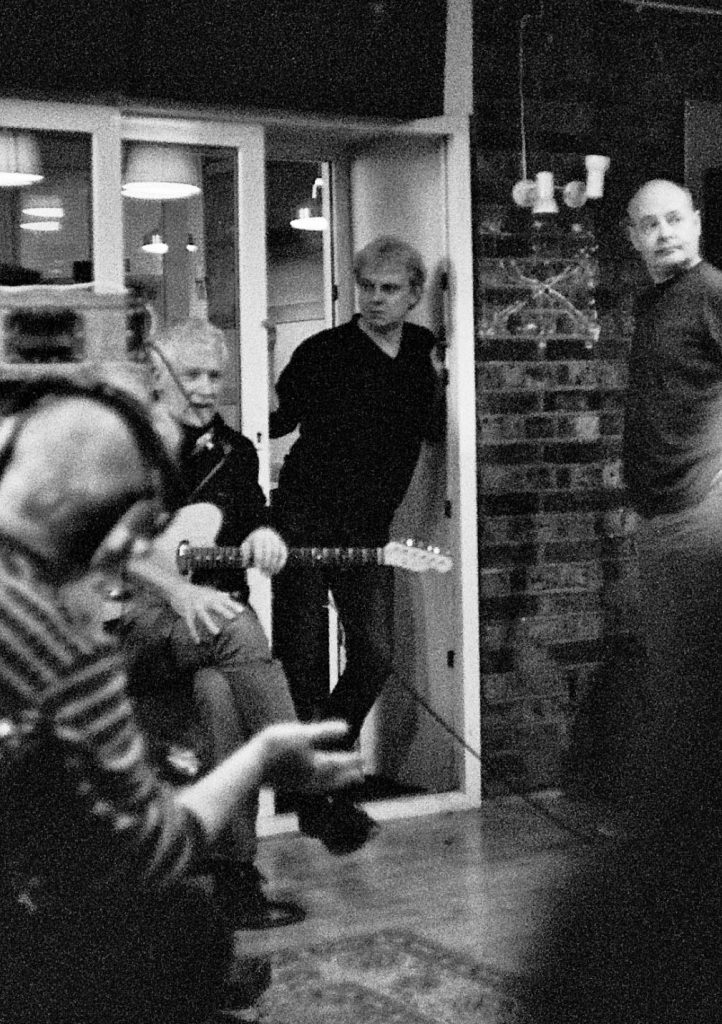
HERE COMES THE STORM was recorded at Metway Studio, Brighton, UK, and features Ian Kearey (bass), Ben Paley (fiddle), James “Bing” Lyle (accordion), Alan Prosser (electric guitar), Dil Davies (drums), Jenny Woodall (backing vocals), and I am on mandolin, and vocals, with the adept Al Scott on the studio knobs. Overdubs and mixing were done at Longport in Canterbury by me with AP retracking an electric guitar.
The video was made by Danny Wood. Studio photos by Ben Paley which is why there is no pic of him! My thanks to those who offered critical advice (in the best possible way) and all those who got stuck in to make this happen. Most importantly thanks to Julie! HX
Playing at: Rochester Sweeps Festival 2022
Sat 30th April 12 Noon. Stage to be confirmed
Monday 2nd May 11.45-12.20pm. Boley Hill Stage.
Playing on a street near you if anyone reads this!